Last Updated on March 11, 2026
Is Jamaica Safe to Visit? Here’s What You Really Need to Know (Updated with 2026 Travel Advisory Info)
If you’re wondering, “Is Jamaica safe to travel to?”— you’re not alone.
This question has been top of mind for many travelers over the years, especially when past headlines or outdated advisories painted a picture that didn’t always reflect the full story.
In fact, because we live between Jamaica and the United States and have operated a villa on the island since 2000, this is a question our guests ask us frequently before their trip.
But here’s the good news: As of 2025, the U.S. State Department has updated Jamaica’s travel advisory to Level 2: Exercise Increased Caution — a positive change from its previous Level 3 designation.
At the same time, it’s important to understand what this advisory really means — because whether you’re traveling to New York, Paris, or Jamaica, being informed is always part of being smart.
Before we dive in, if you’re planning a trip to Jamaica with a small group or extended family of 8-17 guests and haven’t yet decided where to stay, consider Mais Oui Villa in Discovery Bay. It’s a private, eight-bedroom villa with a chef, butler, and concierge and perfect for groups who value comfort and personal service.

Quick Answer: Is Jamaica Safe to Visit?
Many travelers searching “Is Jamaica safe to visit?” are simply looking for a clear answer.
Yes. Jamaica is generally safe for tourists who use the same common-sense precautions they would use anywhere else.
More than four million visitors travel to Jamaica each year and the overwhelming majority have safe, enjoyable vacations. Violent crime involving tourists is very rare and typically occurs in local communities rather than established tourist areas or establishments.
The U.S. State Department lists Jamaica as Level 2: Exercise Increased Caution, the same advisory level as destinations such as the United Kingdom, France, Germany, Costa Rica, and the Maldives.
Like any destination, being informed and using good judgment helps ensure a safe and memorable trip.
QUICK SAFETY SNAPSHOT
- Jamaica has a Level 2 travel advisory, the same level as the UK and France.
- Use common-sense precautions, just like you would anywhere else.
- Millions of visitors come safely every year.

Table of Contents
Full disclosure:
Because we have owned and operated Mais Oui Villa in Jamaica since 2000, we spend a great deal of time on the island ourselves and live between Jamaica and the United States. Over the years we have worked closely with local staff, drivers, tour operators, and neighbors in the Discovery Bay community.
We pride ourselves on being honest and forthcoming with our guests because it is in both our guests’ and our own best interest for everyone to have a safe and enjoyable time in Jamaica.
Our ultimate goal is for guests to have a fantastic time in Jamaica, regardless of whether they stay with us.
The care and concern we have for our guests is evident in the string of 5-star reviews that we have on Google, AirBnB , VRBO, and even Facebook.
Is Jamaica really that popular as a tourist destination?
Yes, it is! Let’s give credit where credit is due.
Jamaica is the second most visited island in the Caribbean region.
An amazing 4.3 million people visited Jamaica in 2024.
Jamaica consistently performs well at the World Travel Awards, often winning awards in multiple categories in the Caribbean and Americas region. In 2025, Jamaica was named “Caribbean’s leading destination” for the 8th consecutive year.
When you think of how much the tourism industry continues to grow, it should be evident that there must be something magical about Jamaica that keeps visitors coming, with many coming back year after year.
So despite the headlines, people are still coming to Jamaica — and most leave already dreaming of their return.
Is Jamaica Safe: What You Need to Know Before You Decide if Jamaica is Safe to Visit
Is it really fair to label the whole island of Jamaica as unsafe?
Not in our opinion.
Lonely Planet says it best …
“Jamaica is probably more plagued by bad media about safety than it is by actual violent crime that affects tourists. Many travelers fear the worst and avoid the country; those who do make it here are far more likely to come away with positive impressions than horror stories.”

When you ask, “Is Jamaica safe”, remember, Jamaica is a large island.
For some reason, perhaps because Jamaica is an island, people tend to think it is a small island that you could get to almost any area of the island within a few minutes.
Not so.
Jamaica is the 160th largest country in the world. It is a large island country of 4411 square miles – about the size of the state of Connecticut.
Think about it.
No one would boycott a whole state if there were a few areas where there were problems.
It’s the same way the whole island of Jamaica should not be painted with one brush.
Understanding the U.S Travel Advisory for Jamaica
Is there a US travel advisory against Jamaica?
There is a travel advisory for every country in the world. The US State Department assigns an advisory level for each country, except itself.
Level 1: Exercise normal precautions
Level 2: Exercise increased caution
Level 3: Reconsider travel
Level 4: Do not travel.
As of May 2025, Jamaica has been upgraded to Level 2. That’s a major improvement and puts Jamaica on equal footing with many favorite vacation destinations.
Here are two Youtube videos which give a balanced dissection of the US Travel Advisory for Jamaica.
These are must-watch videos. These videos were recorded when Jamaica was still listed at Level 3, but they explain why many observers believed the advisory more accurately reflected a Level 2 designation.
Travel After Hurricane Melissa
In October 2025, Hurricane Melissa made landfall in Jamaica as a Category 5 storm and caused damage in parts of the western and southwestern regions of the island.
Following the storm, the United States temporarily raised Jamaica’s travel advisory from Level 2 to Level 3 while recovery efforts were underway.
By January 17, 2026 the advisory was reduced again to Level 2, reflecting the progress made in restoring infrastructure and tourism services across the island.
Most tourism areas recovered quickly and continued welcoming visitors.
If you would like a more detailed update on travel conditions after the storm, see our article:
Is It Safe to Travel to Jamaica Now After Hurricane Melissa?
Is Jamaica safe to travel? What Does the US Travel Advisory Really Say?
In May 2025, the U.S. State Department changed Jamaica’s travel advisory to Level 2 – Exercise Increased Caution, acknowledging the improvements that many locals and travelers have long recognized.
If you read the advisory, you will note that it lists specific areas of concern within Jamaica, Level 4 – all of which are quite a distance from our villa, Mais Oui.
Additionally, it would be the unusual tourist who would venture to or otherwise end up in those areas without a great deal of effort. Most Jamaicans avoid these areas themselves unless of course they live or work there or have relatives in the area.
Important tip: Always read the full advisory — not just the number. The U.S. advisory for Jamaica lists specific areas to avoid (see below), not the entire island.
Places to Avoid in Jamaica
Like anywhere else, crime is directly related to population density.
Jamaica’s population is estimated at 2.9 million people.
1,376,000 of those live in one of 4 major cities or towns in Jamaica
Kingston (Kingston Parish): 937,000
Portmore (Saint Catherine): 182,000
Spanish Town (Saint Catherine): 147,000
Montego Bay (Saint James): 110,000
Almost 50% of the population lives in these four cities or towns on the island. Given the high population density in those towns, it is not surprising that all of those areas house some of the areas of concern in the travel advisories.
Where are the specific areas to avoid based on the US Travel Advisory?
The areas listed in the travel advisory are places that most Jamaicans also avoid unless they live or work there. It would therefore be unusual for tourists to end up in these areas without going well out of their way.
The advisory highlights specific neighborhoods within several parishes. In general, these areas are located in parts of larger cities and urban communities rather than in tourist zones.
Examples include:
St. Ann Parish – Do Not Travel
Steer Town and Buckfield near Ocho Rios (about 1–1.5 hours from Mais Oui Villa).
St. Catherine Parish – Do Not Travel
Spanish Town and several communities within Portmore (about 2 hours from Mais Oui Villa).
Clarendon Parish – Do Not Travel
Except when passing through on the T1 and A2 highways.
St. Elizabeth Parish – Do Not Travel
Certain communities near Alligator Pond (about 3 hours from Mais Oui Villa).
Hanover Parish – Do Not Travel
Logwood and Orange Bay (about 2.5 hours from Mais Oui Villa).
St. James Parish – Do Not Travel
Parts of Montego Bay on the inland side of the A1 highway (about 1 hour from Mais Oui Villa).
Kingston and St. Andrew Parish – Do Not Travel
Several inner-city neighborhoods of Kingston (about 2–2.5 hours from Mais Oui Villa).
Manchester Parish – Do Not Travel
Certain neighborhoods of Mandeville (about 2.5 hours from Mais Oui Villa).
St. Thomas Parish – Do Not Travel
Specific communities near Seaforth and Yallahs (about 3.5 hours from Mais Oui Villa).
Trelawny Parish – Do Not Travel
Clarks Town (about 45 minutes from Mais Oui Villa).
Westmoreland Parish – Do Not Travel
Certain communities near Savanna-la-Mar and parts of Negril (about 2.5–3 hours from Mais Oui Villa).
Mais Oui Villa is located in Discovery Bay, far from the areas listed in the U.S. advisory and in a part of Jamaica known for peaceful, low-density tourism.
Like many countries, Jamaica’s safety varies by neighborhood and city. Fortunately, the areas where most visitors stay and spend their time are very different from the communities listed in the advisory.
Is Discovery Bay Jamaica safe?
Discovery Bay is a peaceful town with very little crime.
It is a small town where tourism developed more in the form of villas and vacation rentals. As a result, it has managed to avoid some of the unwanted elements that come with large cities.
It attracts travelers looking for a quiet, villa-style vacation, not crowds or nightlife.
Medical Care and Travel Advisories in Jamaica
Another factor mentioned in the U.S. travel advisory relates to medical care.
Jamaica does have some challenges with emergency medical services, particularly ambulance availability in certain parts of the island. Travelers should be aware that emergency response systems may not operate in the same way they do in the United States.
At the same time, Jamaica is home to the University of the West Indies, one of the leading academic medical institutions in the Caribbean. Many doctors and nurses trained there go on to work in hospitals throughout North America, the United Kingdom, and other countries.
In fact, some smaller Caribbean islands transfer complex medical cases either to Jamaica or to hospitals in Florida.
Visitors should also be aware that most domestic health insurance plans do not provide coverage outside the country where the policy was issued unless the plan specifically includes international coverage.
In practical terms, this means that your regular medical insurance card is unlikely to be accepted in Jamaica. Medical services are typically paid for at the time care is provided, usually with cash or a credit card.
This is not unique to Jamaica. The same situation exists in many countries around the world, which is why travelers are often encouraged to purchase travel insurance before an international trip.
For that reason, purchasing medical and travel insurance is always a good idea when traveling internationally.
Is Jamaica safe: What about the risk of terrorism?
Jamaica and the Caribbean region are considered low risk for terrorist activity.
By contrast, attacks in places like London, Paris, and even New York have unfortunately become more common.
Who could have predicted the terror attacks in London, Paris, Barcelona, Playa del Carmen in Mexico, and even here in the USA – New York, Boston, Las Vegas, and Austin.
Is Jamaica safe? How does crime in Jamaica compare to other places?
50 most dangerous cities in the world (number of homicides per 100,000 population).
Kingston (#24) does appear on the list of 50 most dangerous cities globally — but so do Memphis (#25), Baltimore (#40), New Orleans (#45) and Detroit (#46) in the U.S.
Millions of people still travel to Washington, D.C. every year despite being near Baltimore. The same logic applies to Jamaica. One city’s statistics shouldn’t define an entire country.
Why Jamaica’s Safety Reputation Is Often Misunderstood
Jamaica has been dealing with safety stereotypes for decades, largely because crime statistics among local communities are often reported without context.
What those statistics rarely show is that the vast majority of incidents occur in specific neighborhoods that tourists rarely visit.
Most travelers spend their time in tourism areas, resorts, villas, beaches, and attractions that operate very differently from the communities where most crime statistics originate.
Understanding this distinction helps explain why millions of travelers continue to visit Jamaica each year and return home with overwhelmingly positive experiences.
Independent travel studies have also ranked Jamaica favorably for traveler safety. Berkshire Hathaway Travel Protection, which publishes annual safety rankings for global destinations, has included Jamaica in its list of safest places to visit every year since the rankings began.
Is Jamaica safe to visit? Is it safe to go to Jamaica?
That’s kind of like asking if America is safe. It’s a loaded question. And the answer is “It’s relative.”
Does violent crime occur in Jamaica? Yes, it does.
Like anywhere else, there are the occasional random events that shock everyone but for the most part, the violence is in certain hot spots.
Most of the violent crimes in Jamaica among locals relate to either crimes of passion or to some sort of illegal activity such as drug trafficking, lottery scamming, extortion, and the associated supporting gang activity and issues related to the sharing of ill-gotten gains. There are also incidents of home invasions and sexual assaults.
Not that it is any less concerning, but it is important to point out that the incidents that you hear about are in the local communities – Jamaican on Jamaican crimes or foreigners living or staying, usually with relatives, in local communities.
It is very uncommon to hear about these types of incidents among people staying at established tourist establishments such as hotels, resorts, villas, and AirBnBs.
So, is Jamaica safe to visit for tourists?
Yes — especially when you stay in established tourist accommodations like hotels, villas, and resorts. Violent crimes against tourists are rare.
Is Jamaica safe for tourists? What types of crimes should tourists be aware of in Jamaica?
Of the millions of tourists who visit Jamaica each year, an unfortunate few do have mishaps.
Property crimes, such as purse snatchings, theft of cell phones, cameras, or other crimes of opportunity certainly happen.
Use the same precautions that you would use in any new place.
How Often Are Tourists Actually Victims of Crime in Jamaica?
When safety is discussed online, crime statistics in Jamaica are often presented without context.
Most of the violence reported in Jamaica occurs within local communities and is typically related to issues such as gang activity, scamming, or disputes among people who know one another.
Tourists are rarely involved in these situations.
More than four million people visit Jamaica every year and violent incidents involving visitors are extremely uncommon.
The most common issues tourists encounter are petty crimes such as pickpocketing or theft of unattended belongings, which can occur in many tourist destinations around the world.
For most visitors, Jamaica is remembered for its beaches, culture, music, and hospitality rather than safety concerns.
Other Safety Risks Travelers Should Know About
While violent crime involving tourists is rare, visitors should still be aware of other safety risks that are more likely to occur during a trip.
Like many tropical destinations, the most common incidents involving visitors tend to be accidents rather than crime.
Drowning is one example. Many beaches in Jamaica do not have lifeguards on duty, and some do not have ropes marking designated swimming areas. Visitors are expected to pay attention to sea conditions and exercise caution when swimming.
Some travelers also ask about sharks in Jamaica. Shark encounters are extremely rare around the island and attacks are virtually unheard of. If you’re curious, we’ve written a detailed article explaining the real story about sharks in Jamaica.
Road accidents are another concern. Driving conditions in Jamaica can be challenging for visitors because vehicles drive on the left side of the road, roads may be narrow, and driving styles may differ from what travelers are used to. For this reason, many visitors choose to hire a private driver rather than drive themselves.
Weather events such as hurricanes can also occur during certain times of the year, although modern forecasting gives travelers plenty of warning. Most tourism infrastructure is designed to handle these situations and recovery tends to happen quickly.
Travelers who stay aware of their surroundings, follow local advice, and use common sense rarely encounter serious problems.
Is Jamaica safe for travel? Should I Just Stay in an All-Inclusive Resort to be Safe?
Not at all. While all-inclusives can offer convenience, many visitors prefer the freedom, privacy, and cultural immersion of villas or guesthouses.
Some all-inclusives exaggerate safety concerns to discourage guests from leaving the property — but that doesn’t reflect the real Jamaica.
“Is there a safe alternative to going all-inclusive as they all look huge and impersonal and we prefer to holiday at B and Bs and eat out at different places? Are there safe areas of Jamaica where it is safe as a tourist to do so?” – Question from TripAdvisor Jamaica Forum
Unfortunately, there’s still a lot of misunderstanding about Jamaica’s safety — and we’re here to clear that up with facts.
Hard as we try we just can’t get rid of the negative stereotypes that plague this beautiful island.
Answer: No, you do not need to go to an all-inclusive.
Yes, there are safe, very safe, areas in Jamaica, for both Jamaicans and tourists. Just look at all the Airbnb, VBRO, and Google listings with great reviews!
For many reasons, including fear of possible liability, the all-inclusives would love for you to believe that they are the only safe option. After all, they “provide everything that you would possibly want on a vacation” – except the opportunity to actually visit the country you are in.
Many of the enclaves are so designed that other than the stamp in your passport, you would not even know you were in Jamaica.
It is not uncommon for staff at many all-inclusives to give the impression that Jamaica is dangerous as a means to discourage guests from leaving the grounds, unless they are going on tours that the all-inclusives arrange for them.
Someone who recently stayed at an all-inclusive hotel gave me a report that a staff member not only “insisted on going with her to a nearby pharmacy but even went inside with her to make sure the workers did not cheat her.”
Most pharmacies in Jamaica have clearly marked prices and transparent tax rates, so there’s rarely any confusion. The tax rate on most items in Jamaica is 15%. The total is simple Mathematics.
Yet, this employee made this woman feel so “safe” and “cared for” and of course got a hefty “undeserved” tip!
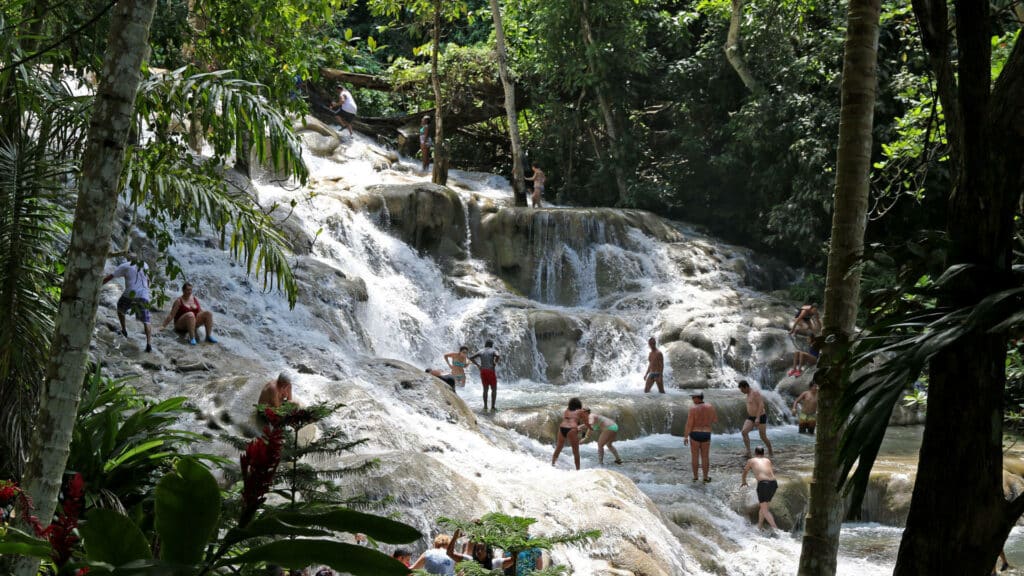
Is it safe to leave the resort in Jamaica?
Many travelers wonder if it is safe to leave the resort in Jamaica. The answer is yes — millions of visitors explore the island’s beaches, restaurants, waterfalls, and attractions every year without problems.
There is no need to stay holed up in your resort, afraid to venture off-property. Jamaica has wonderful attractions and local restaurants to visit. That said, be sure to use recommended transportation and not hail cabs on the street. See below for 20 tips to stay safe in Jamaica.
Is Jamaica safe? Will a state of emergency ruin my vacation?
No. A state of emergency in Jamaica is often a proactive crime-fighting tool, not a warning to tourists. It allows the military to assist police, especially in high-risk neighborhoods.
These measures are usually localized and temporary and rarely impact tourists beyond the occasional checkpoint.
The first one in recent years was in St. James in 2018 and was sort of a catch-22 situation that caused a PR nightmare, which still plagues us.
The Jamaican government wanted tourists, and locals, to feel safe. The Jamaican government also wanted the locals and the US government to know that they were trying to catch the scammers, which is a source of a lot of the publicized violence.
To do so, the military assisted the police, which to most foreigners conjured up the impression of martial law, which was a gross exaggeration but nevertheless created a lot of fear.
What many journalists and visitors did not appreciate is that by Jamaican law, the military cannot be deployed without a “state of emergency” being declared.
In the US, for example, there are several layers of law enforcement – local police, state police, and the national guard.
Not so in Jamaica. There are the police and then there are the military forces.
For tourists, there was the occasional inconvenience of having to pass through security checkpoints on the way to and from the airport or tours.
Locals were largely impacted with an increased chance of being stopped and having their documents checked and vehicles searched.
Has there been States of Emergency in Jamaica since the 2018 Incident?
Yes. The government, from time to time, has used states of emergency as part of its crime-fighting tactics.
This effort is usually related to curbing gang-related activities in certain areas. These are very unlikely to affect tourists.
20 Tips to Stay Safe in Jamaica (or anywhere else for that matter)
- Do not buy drugs. Stay away from people selling or offering drugs of any kind. Associating yourself with any criminal element is likely to increase your chance for trouble.
- Unless you have family living in known “hot spot” areas, do not visit those areas.
- Avoid excessive jewelry. Leave the fancy jewelry at home. Don’t count or otherwise display cash in public. Avoid the image of the “rich” tourist. Why tempt fate or attract unwanted attention?
- Remember that locks on windows and doors are there for a reason. Use them.
- Use the safe in your room or hotel for any valuables with which you have to travel.
- Do not bring strangers back to your hotel. Please do not befriend locals on the beach, bars, or elsewhere and bring them back “home” with you. Keep your friendly conversation to the beach or to public places and daylight hours.
- Remember, “How Stella Got Her Groove Back” was a movie. Be wary of new love interests, especially those who seem to be looking for love and you are now their “soulmate”. You may have been targeted to be the next sugar daddy or sugar mamma.
- Be wary of new friends who have all the time in the world to hang out with you. That means they have no jobs! You are likely their next meal ticket.
- Do not agree to carry anything back to the US for anyone. If the package happens to contain drugs, and you get caught, you will be the one doing the time.
- Don’t walk around alone at night. This includes the beach!
- Always let someone know where you are or where you are going.
- Have a charged cell phone with you.
- Have a trusted local with you, if possible. For example, our staff usually go with our guests on their nature walks, not because it is unsafe, but we feel it is just good practice having a local along.
The hustlers tend to leave you alone or back off when they see that you are in the company of another Jamaican. They know they are possibly dealing with one of two situations.
Either you are with another hustler and they better not try to interfere. Or, they figure the local will spot the hustle and ask them to move along.
In either case, you are then too much hassle. It is easier for them to bother an unaccompanied tourist.
- As much as we support locals, we, personally, do not hail taxis on the street, or take public local buses or taxis.
Some tourists do this and think it is a great experience, especially since it is so much more economical.
We don’t because the taxis and buses are usually overcrowded. The drivers often drive at speeds that make us uncomfortable. Pickpocketing or petty theft is fairly common.
At any rate, only use taxis and buses with red PP license plates.
Vehicles without those plates are not approved to provide transportation for paying customers. While it does cost more, we either hire a private taxi, one that is recommended to us by a local we know, or we hire a car or van and driver service to take us around.
The car or van and driver approach may seem expensive but it is generally more cost-effective as you do get what you pay for – more comfort, flexibility, security and personalized experience.
And, not having to haggle with the taxis over price is wonderful. - Don’t take valuables with you to the beach or on excursions. It is too much of a hassle trying to keep them safe. You certainly can’t leave them on the beach while you go off for a swim. They are likely to be stolen. Of course that could happen anywhere!
- Enjoy yourself but go easy on the alcohol.
The liquor and the heat are not necessarily a good combination. Some of those drinks are more potent than you realize.
Alcohol can cloud your judgment. The last thing you want is to have someone, anyone – could be a local, a staff member, or even another guest, take advantage of you. - Dress modestly so as not to attract unwanted attention, especially catcalls.
- Walk with confidence. Don’t act like you are afraid that someone is going to “do something to you”. People can generally sense when others are uncomfortable. And, that’s true whether you are at home or abroad.
- Avoid eye contact with anyone selling you anything you don’t want. A pleasant “No thank you” is usually adequate. Some vendors can be persistent. Don’t let that faze you. Read the article “How to Survive a Visit to the Craft Market” for more insight in this area.
- Remember to bring your prescription medications as well as any other medications that you take regularly with you. Consider purchasing travel insurance and get international medical insurance before your trip. Medical care abroad usually requires payment at the time of service, and insurance can help cover unexpected expenses.
- BONUS TIP: How to stay safe in Jamaica …. We saved the number 1 rule for last. Pack a heaping dose of common sense with you and use it liberally while you are there. Don’t do anything you wouldn’t do at home.

Frequently Asked Questions
Is Jamaica safe to visit with kids?
It is definitely safe to travel to Jamaica with kids. We’ve been traveling to Jamaica with our son since he was two months old. Jamaicans genuinely love children, and many attractions across the island are kid-friendly. While most all-inclusive resorts cater more to adults, villas offer a more flexible environment for families — especially with young kids.
The biggest risk for children in Jamaica isn’t crime; it’s lack of supervision, particularly around pools and beaches.
Stay attentive, use common sense, and your family can enjoy a safe and unforgettable Jamaican vacation.
Is Jamaica safe for Americans? Is Jamaica safe for Canadians?
Yes. Jamaicans welcome all visitors, regardless of where you’re from. Tourism is a vital part of the economy, and locals are generally warm, friendly, and proud to share their culture. As with any destination, showing respect for local customs and people goes a long way. Treat Jamaica — and Jamaicans — with kindness, and you’ll be treated the same in return.
Is Jamaica safe for white tourists?
Yes. Jamaica is a welcoming destination for travelers of all backgrounds. White tourists visit the island every day and are treated with warmth and hospitality. As with any international travel, being respectful of the local culture and avoiding risky behavior helps ensure a safe and enjoyable experience.
Is Jamaica safe for black tourists?
Absolutely. In fact, many Black travelers find visiting Jamaica especially meaningful and comfortable, given the island’s predominantly Afro-Caribbean population and vibrant cultural heritage. Whether you’re coming to explore your roots, relax, or celebrate, you’ll find Jamaica to be a place where you’re seen and welcomed.
Is Jamaica safe for LGBTQ+ travelers?
Jamaica has a complex relationship with LGBTQ+ rights. While same-sex intimacy remains criminalized under outdated colonial-era laws, enforcement is rare, and many LGBTQ+ travelers visit the island safely every year — especially when staying in private villas, major resorts, or traveling with trusted guides.
Discretion is advised in public, particularly outside of tourist areas. Public displays of affection of any sort are frowned upon. That said, respect and privacy are core values in Jamaican hospitality.
At Mais Oui Villa, we welcome all guests and are committed to creating a safe, inclusive, and affirming environment for everyone.
What part of Jamaica is safest for tourists?
While millions of tourists visit Jamaica safely each year, the busiest areas — like parts of Kingston and Montego Bay — tend to have higher crime rates, especially in crowded or nightlife-heavy zones.
That’s why many travelers choose quieter towns like Discovery Bay, which offers the best of both worlds: proximity to top attractions without the congestion or risk that comes with larger cities.
Staying in a private villa, like Mais Oui Villa, also adds another layer of safety. Villas are controlled environments with a dedicated staff, no unknown guests, and enhanced privacy — making them a smart choice for those seeking a peaceful and secure vacation.
Blog post: How the heck am I to decide where to stay in Jamaica?
Is it safe to stay in a villa in Jamaica?
Yes, staying in a villa can be one of the safest and most enjoyable ways to experience Jamaica — especially when you book a licensed and professionally managed property. Villas offer a private, controlled environment with dedicated staff and no unknown guests.
Important: Just because a property is listed on Airbnb doesn’t mean it’s licensed. Always book directly with the villa or confirm that the property meets Jamaican tourism and safety standards. A properly licensed villa — like Mais Oui Villa — prioritizes your comfort, security, and peace of mind.
Is Jamaica safe for tourists in 2026?
Yes. As of January 2026 Jamaica is under a Level 2 travel advisory from the U.S. State Department. Millions of visitors travel to the island each year and violent crime involving tourists is rare.
Is it safe to travel to Jamaica after Hurricane Melissa?
Yes. Although Hurricane Melissa caused damage in parts of south-western and western Jamaica in October 2025, recovery efforts were swift and most tourism areas resumed normal operations quickly. By January 2026 the U.S. travel advisory was reduced back to Level 2.
Is Jamaica safe outside of resorts?
Yes. Many travelers stay in villas, guesthouses, and vacation rentals across the island. In fact, a significant percentage of visitors choose short-term rentals rather than all-inclusive resorts. Using licensed transportation and basic travel precautions is recommended.
Is Jamaica safe for solo travelers?
Jamaica is generally safe for solo travelers who exercise the same precautions they would use anywhere else. Travelers should avoid unfamiliar neighborhoods at night and use recommended transportation.
Is Jamaica safe for women travelers?
Many women travel to Jamaica safely each year. Visitors should be aware that Jamaican men can sometimes be more vocal with compliments or catcalls than travelers may be accustomed to. While this can be annoying, it is usually harmless and best handled with a polite but firm “no thank you.” And, also, please do not fall for any of the online romance scams where you come to Jamaica to find a mate. Enough said.
The vast majority of travelers have safe, joyful, unforgettable experiences on the island — especially when staying in peaceful areas like Discovery Bay.
So go on to Jamaica and have a great time.
And, if you know anyone who would ask, “Is Jamaica safe to travel to?”, please share this article with them so that they too can get a different perspective.
If you are planning a trip to Jamaica, you may also find these guides helpful
How to Decide Where to Stay in Jamaica: This guide explains the major tourist regions of the island and what each area offers travelers.
6 Steps to Budgeting for Your Jamaica Villa Vacation Cost: Understanding how villa vacations are priced can help you plan a trip that fits your budget while still delivering an unforgettable experience.
Are Villas More Expensive Than Hotels: Find out how the pricing for villas differs from hotels.
How to Pick the Right Vacation Rental in Jamaica, Sight Unseen: If you’re planning a trip to Jamaica with family or friends, staying in a private villa allows everyone to enjoy the island together without the crowds of a resort.

Inside you’ll learn:
• how to tell if a villa listing is legitimate
• what questions to ask before booking
• how villas compare to resorts
• how to avoid common vacation rental mistakes
Download the guide and start planning your Jamaica vacation with confidence.
For those who want an experience that marries privacy, luxury, high-touch personalized service, unparalleled amenities, and sustainability, look no further than our 8-bedroom staffed villa, Mais Oui, the perfect choice for family vacations and celebrations.
If you love our house and want to stay with us, here is the link to our own website to book directly with us: https://MakeItJamaica.com
If for whatever reason you wish to book through an online agency, here are the links to our listings. We prefer for you to book through them than to not book at all.
We look forward to hosting your group soon!
‘Til next time.
Think and dream Jamaica!
Sherry, Darrell, and Darrian
Considering a visit to Jamaica with a group? Contact us today for more information about, Mais Oui Tennis & Spa Villa, our boutique 8-BR ocean view Jamaica villa rental experience in beautiful Discovery Bay, Jamaica. Perfect for multi-generational families and groups, retreats, and intimate destination weddings and vow renewals.
Visit our website: https://MakeItJamaica.com
Give us a call: 833.624.7684 (toll free) or 914.709.0457
Like us on Facebook: https://facebook.com/MakeItJamaica
Follow us on Pinterest: https://pinterest.com/makeitjamaica
Subscribe to our You Tube channel: https://youtube.com/MaisOuiVilla
Follow us on Instagram: @MakeItJamaica
Sign up for our newsletter and immediately get our Free Discovery Bay Insider Guide to discover what you won’t find in the guidebooks.
Support Locally Owned Venues
Thank you for visiting our blog! We hope you’ll consider a locally owned wedding venue for your big day and show some love to other independent venues around the world.
The Barn at Green Garden Farm Blog, Cornerstone Ranch Events Blog, Springhaus Farm Blog, Adler Ranch Blog, Cakes Rock Blog, The Venue 112 Blog, Vista West Ranch Journal, The Creek Haus Journal, Antler Ridge Blog, 5 Family Ranch Blog